Learning To Fly The Navy Way

January 2, 2009 by Michael Scott

My past few months as a commissioned Naval Officer have been a whirlwind of activity.   After graduating from the Naval Academy in May, a whirlwind trip through the Pacific on Air Force cargo jets, and a short temporary job at a fighter training squadron, I embarked on the long journey to become a Naval Aviator.

In July, I left for Pensacola, Florida, the aptly named “Cradle of Naval Aviation,” to begin Naval Flight training.  After three fantastic months of waiting in Pensacola (previously my hometown for three years) during the summer I finally classed up for Aviation Preflight Indoctrination (API).  API consists of six weeks: the first four weeks are focused on swimming, academics, and exams on subjects like Aerodynamics, Engines, and Weather.  The last two weeks were the fun part: survival training.  During that time we were able to do exciting things like the low-pressure chamber to simulate hypoxia and the water escape “dunkers.” 

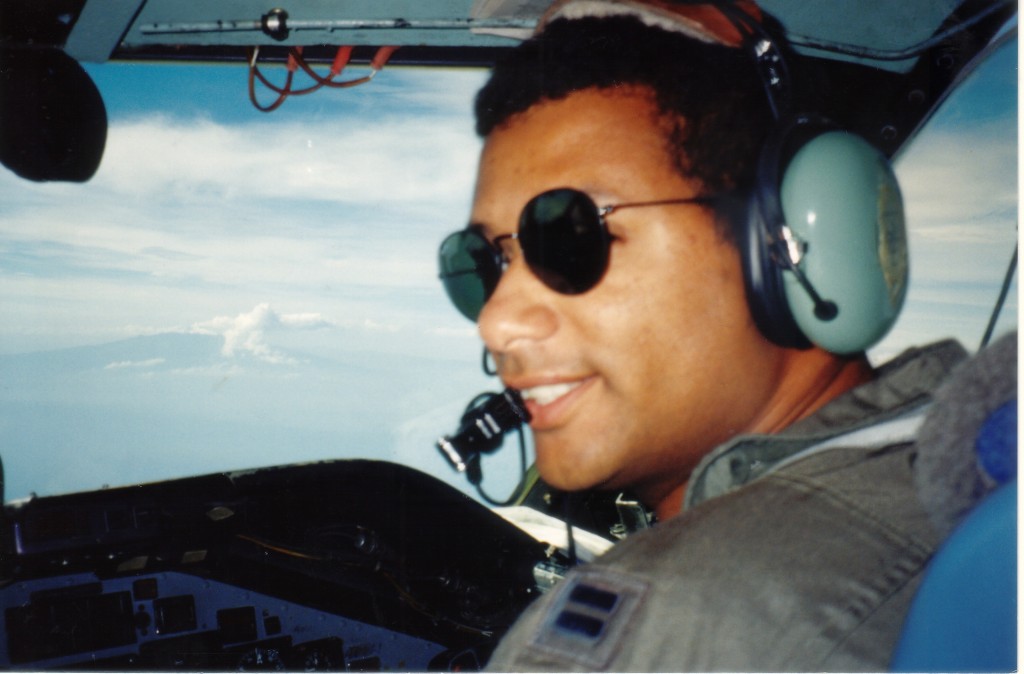
After finishing up six weeks of training in Pensacola, I then moved to Corpus Christi, Texas to begin primary flight training.  Primary usually lasts six to nine months, depending on how quickly one progresses.  I’ve recently finished ground school and have begun studying a stack of books over a foot high.  Emergency procedures, systems, and course rules are just a few of the things I’m studying to prepare for simulators and my first block of flights in the T-34C Turbo Mentor.  With any luck, I should be finishing primary by summer and continuing on to advanced training for tailhook (carrier-based planes), helicopters, or maritime patrol.     

I’d like to think back to six years ago when I got my first real flight experience.  I wanted to become a pilot ever since I was born, but it was the LeRoy W. Homer Jr. Foundation that enabled me to complete flight training and become a civilian pilot.  The Homer Foundation provided the basis of my aviation knowledge and experience that has and will continue to help me as I progress through Naval Aviation training.  The Homer Foundation honors those who perished on the terrible events of September 11th, continuing to inspire the hopes and dreams of lucky young aviators like myself.  I am forever grateful that I was fortunate enough to have been selected as one of the first scholarship recipients.  I hope the LeRoy W. Homer Jr. Foundation is able to continue to inspire new pilots as we enter the new year.


Michael Scott

Past scholarship recipient

Air Force Base Building Dedication

December 1, 2008 by Melodie Homer

This past October, the Major LeRoy W. Homer Jr. Operations Building was dedicated at Wright-Patterson AFB in Dayton, OH. I’m thinking they’ll have to shorten that name when they refer to it - maybe Homer Ops or some kind of acronym. The military seems to like acronyms.

LeRoy was with the Reserves here from 1995 until 2000. It felt strange to be in a place where LeRoy had spent so much time, a place that was part of our lives, but I had never seen, until now.

The dedication ceremony, like every other time I have been to an event honoring LeRoy, was bittersweet. I’m proud of him, but I’m heartbroken that he’s not here. During the ceremony there was an F-16 missing man flyover formation. I had seen this once before when LeRoy and I were at his ten year Air Force Academy reunion. Even then, not knowing the pilots the flyover was honoring, I remember how powerful it was. So when I found out they were planning a missing man formation at the ceremony, I was dreading it. And when it happened, it was pretty intense.

That afternoon we were given a tour of the Air Force Museum. It is really an amazing place. There’s aircraft from every conflict in history, rockets, space capsules and a presidential aircraft exhibit. Even the gift shop was cool. I bought some astronaut ice cream. Big hit with my kids, and my parents!

LeRoy flew the C-141 throughout his entire military career. The final C-141 retired in May 2006, is on display at the Museum .This aircraft, named the Hanoi Taxi, flew the first mission of Operation Homecoming in 1973 to return American prisoners of War from North Vietnam to the US. They told us LeRoy had flown that actual C-141.

If you are interested in aviation, even a little bit, the museum is definitely worth a visit to Dayton. And if you happen to be driving past the base, you can see the Major LeRoy W. Homer Jr. Operations building from the highway.

Melodie Homer

Aviation in my life

November 1, 2008 by Richard Valenta

Taking to the sky is a life changing event for many people who enjoy their first flight. Flying is a unique experience among people, for we were destined to walk the land, yet through hard work and creativity we finally were able to take in a view of the earth once seen by few. Due to the romanticism and challenges of flight, it has created a small community of aviators that immediately feels at home whenever around each other. This special group of people is willing to share their love and enjoyment of flight, and encourage paths that lead to a motivated and fulfilled life. The LeRoy Homer Foundation belongs to this special community, and gives the opportunity of a lifetime: to earn your pilots license and join the community of aviators.

I became interested in aviation at a young age. My grandfather was an Eastern Airlines mechanic, and he built a plywood aircraft in his back yard complete with old aircraft instruments. He would explain how everything worked, and I was hooked. Once in high school I read everything I could about airplanes, and obtained a manual labor job at a helicopter hangar. This was my first experience with the aviation community, and I would pick pilot’s brains and occasionally go on short maintenance flights. I desperately wanted to take flight lessons, however my family could never afford it. Then the Homer Foundation blessed me with their scholarship, and my life was forever changed. The summer between my sophomore and junior year of high school was the best in my life. I flew almost four times a week, loving every minute of it. I earned my license on my seventeenth birthday, and finally was a pilot.

Being a private pilot motivated me even more to pursue a career in aviation. Obtaining my license enabled me to get a job at my flight school, which in turn led me to meet very interesting and influential people in my life. I found that I not only enjoyed flying airplanes, but I was very interested in their design as well. I also was able to listen to a variety of “shop stories” about naval aviation, which was something I had always been interested in. This led me to study aeronautical engineering at Purdue University, and enter the Navy ROTC program. At Purdue being a pilot introduced me to several of my closest friends, as we would stay up late on the weekends talking about flying and airplanes. Having my pilot’s license has also been an enormous advantage in aeronautical engineering, enabling me to visualize aeronautical concepts through experience, rather than only a textbook. In the aeronautical engineering school I have also found that same love of flight found among pilots, and this has helped me as I struggled through long hours of studying for endless exams.

I plan to graduate next year with my degree and a naval commission, and I hope to be selected for naval aviation. None of this would have been possible without the Homer Foundation. Their scholarship motivated me and opened doors in ways I would not have thought possible. I have found what I want to do with my life, a blessed quality that has its foundations in that memorable summer when I first earned my wings. I am eternally grateful to the foundation to their generosity, and it is my ambition to one day change another teen’s life as they changed mine.

Richard Valenta

As graduation approaches…

October 2, 2008 by Michael Hames

These past four years have gone by so quick.  I can remember whenever I first started flying with the generous help from this foundation.  I feel like I have come so far from that time, but I still wonder if things will turn out okay.  Over the past few years, the aviation industry has come a long way from its downturn since the September 11th terrorist attacks.  However, recently the financial crisis and unprecedented fuel costs have once again put the industry into a downturn.  And all when I will be graduating in a few months.
Since entering the aviation industry a couple of years ago, I could definitely tell it was going to be a fun ‘rollercoaster ride’.  The industry constantly changes, but this is one of the reasons why I like it so much. It’s never boring, and new challenges emerge almost every day.  I see the changes daily while working at the local F.B.O.  Traffic has decreased significantly due to fuel prices, and there seems to be no solution.  Now, I have started thinking about the possibility of my current job closing or downsizing significantly.  I am hoping everything rebounds, and hope this is just another challenge for everyone. This should only be temporary, and things should only get better in the future.
This past summer I was fortunate to be able to do an internship with United Airlines in Washington D.C.  The experience was amazing, and helped me to notice how close I am to finally achieving my goal.  It was my plan to apply for pilot positions with regional airlines after graduation in December, but will probably have to delay this.  Almost no regional airlines are hiring, and most have already started furloughing pilots.  I feel frustrated for working so hard for four years, but have to keep in my mind that one day things will turn around.  In the meantime, I’ve started applying for airline management positions while waiting for regional airline’s to start hiring again.
I hope people realize how instrumental this foundation is to helping start careers of young aviation professionals, and I will be forever grateful to the great individuals within the foundation.  Flying has become very expensive over the past few years, and I have watched many friends stop flying due to financial strains.  I have wondered if my life might have taken the same path if it weren’t for this scholarship.  Student loans may not be enough to cover the cost of a flight course now as prices have almost doubled where I go to school.
As graduation nears, I am getting ready to embark on what I hope to be an exciting journey.  I know it will definitely be eventful, and never boring. I truly love flying, and know that any changes throughout the industry will only be obstacles to overcome!

Michael Hames,  past scholarship recipient

Welcome

September 8, 2008 by Melodie Homer

Welcome to our new website.  We hope you enjoy the fresh design and new features.  We plan to use this blog to keep you updated on a more consistent basis, on aviation related issues, our accomplishments and any information we feel will be important to you, our supporters.  You will hear from different voices - other board members, past scholarship recipients - and anyone else who has something relevant to say regarding The Foundation, or aviation as a whole.

And most of all, we want you to hear our opinions, and sometimes our frustrations on running a successful organization.  For example, up to this point we have had little support from corporate aviation.  There are 3768 aerospace companies in the United States.  If every company donated $10.00, we would easily be able to award the three scholarships a year we had planned to when we began this endeavor six years ago.  And as we all know, corporations benefit when they donate.  And although the pilot shortage has been temporarily fixed due to the retirement age being extended from 60 to 65 years of age, this is only a short-term solution.

If I didn’t believe in what The Foundation is doing, I would have quit a long time ago.  The Foundation takes up A LOT of time, and I recently went back to work part-time, plus I’m a single mom to a four year old and an eight year old.  But I think aviation is exciting.  And so did LeRoy.  He just really enjoyed his job.  And even with all the cutbacks the airlines have made that have affected the pilot’s income and benefits, he would have still loved to fly.  I’m sure he would have shared his colleagues’ frustration, but he wouldn’t have let that ruin the pleasure he had in doing his job.

The Foundation has not had great support from other pilots, which is an irony I have difficulty understanding.  I always think that if someone can afford to go to Starbucks a few times a week, a $20.00 donation once a year to a Foundation that supports young adults who want to have the pleasure of doing what you do for a living, is not a lot to ask.

But I will end on a positive note and say that I do appreciate everyone who has and continues to carry on LeRoy’s legacy through this Foundation.  This year has been exciting for us as our first two scholarship recipients (2003) have started their professional aviation careers, Mike as a navy pilot, and Sarah as a flight officer with Mesa Airlines.  Very cool!